
- This event has passed.
Brandon Hollingsworth on Preventing dengue using Wolbachia infected mosquitoes | GES Colloquium
GES Colloquium Home | Fall 2019 MediaSite Live-Stream | YouTube Library (Past Colloquia)
Preventing dengue using Wolbachia infected mosquitoes: developing optimal release strategies on an uncertain time horizon
Speaker: Brandon Hollingsworth, Ph.D. student in Biomathematics, NC State
Abstract
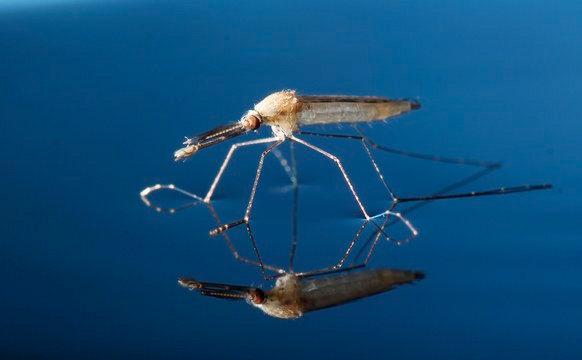
Dengue virus, which is responsible for dengue fever and dengue hemorrhagic fever, is a systemic viral infection spread most commonly by the mosquito Aedes aegypti. Dengue is estimated to infect 390 million individuals a year worldwide, with around 3.9 billion people at risk of infection. Currently, there are no licensed vaccinations or therapeutic treatments for the disease and control of the vector species through conventional methods has proven inefficient and costly. Recently, there have been several novel vector control techniques proposed to prevent dengue outbreaks. Of these, the approach most likely to be implemented in the near future relies on infection with the bacterium, Wolbachia.
Wolbachia is a naturally occurring infection in most species of arthropods worldwide. In Ae. aegypti, it is a chronic infection that is vertically transmitted, reducing the fitness of infected mosquitoes and blocking the ability of the infected mosquito to acquire and transmit dengue. Additionally, due to cytoplasmic incompatibility Wolbachia shows super-mendelian inheritance, allowing for it to self-maintain and spread in a population. These aspects of Wolbachia have led many organizations to discuss the implementation of Wolbachia based vector-controls. However, the rearing and release of Wolbachia infected mosquitoes will require funding and optimal release strategies have yet to be discussed.
As part of an interdisciplinary GES class, we developed a framework to determine an optimal release strategy for Wolbachia infected mosquitoes in an area at risk for epidemic dengue with an uncertain time horizon. We then used this framework to determine an optimal release surface and find that it is relatively insensitive to most parameters and, in most situations, suggests an “all or nothing” release plan. This allows the optimal release question to be reframed in terms of optimal facility size which is found using fixed cost analysis.
Speaker Bio
Brandon Hollingsworth is a Biomathematics Ph.D. student studying mosquito and disease ecology and control at NC State University
WordPress database error: [Unknown column 'wp_tec_occurrences.start_date' in 'SELECT']SELECT SQL_CALC_FOUND_ROWS wp_posts.*, CAST( wp_tec_occurrences.start_date AS DATETIME ) AS event_date
FROM wp_posts LEFT JOIN wp_term_relationships ON (wp_posts.ID = wp_term_relationships.object_id) LEFT JOIN wp_postmeta ON ( wp_posts.ID = wp_postmeta.post_id AND wp_postmeta.meta_key = '_EventHideFromUpcoming' ) LEFT JOIN wp_postmeta AS mt1 ON ( wp_posts.ID = mt1.post_id )
WHERE 1=1 AND wp_posts.ID NOT IN (13691) AND (
wp_term_relationships.term_taxonomy_id IN (521)
OR
wp_term_relationships.term_taxonomy_id IN (45,47)
) AND (
wp_postmeta.post_id IS NULL
AND
( mt1.meta_key = '_EventStartDate' AND CAST(mt1.meta_value AS DATETIME) >= '2026-04-13 12:17:03' )
) AND wp_posts.post_type IN ('post', 'page', 'attachment', 'tribe_venue', 'tribe_events', 'tribe_event_series') AND ((wp_posts.post_status = 'publish'))
GROUP BY wp_tec_occurrences.occurrence_id
ORDER BY event_date ASC, wp_posts.post_date ASC
LIMIT 0, 3