
Fall 2018 Colloquium Intro (lunch from Neomonde)
Our series will kick off with a catered lunch from Neomonde on Tuesday, August 28. Come prepared to give a short update about your recent GES activities and upcoming plans.
Our series will kick off with a catered lunch from Neomonde on Tuesday, August 28. Come prepared to give a short update about your recent GES activities and upcoming plans.
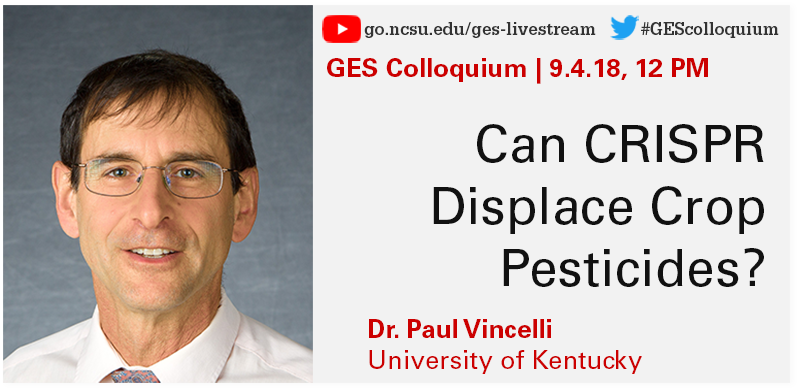
9/4 GES Colloquium: We are thrilled to welcome Paul Vincelli as our first invited speaker of the semester. Paul is an extension professor at the University of Kentucky in the department of Plant Pathology, as well as co-host of the Talking Biotech podcast! He will be available to have lunch and/or meet with folks during his visit on 9/4. Request meeting with Paul >>
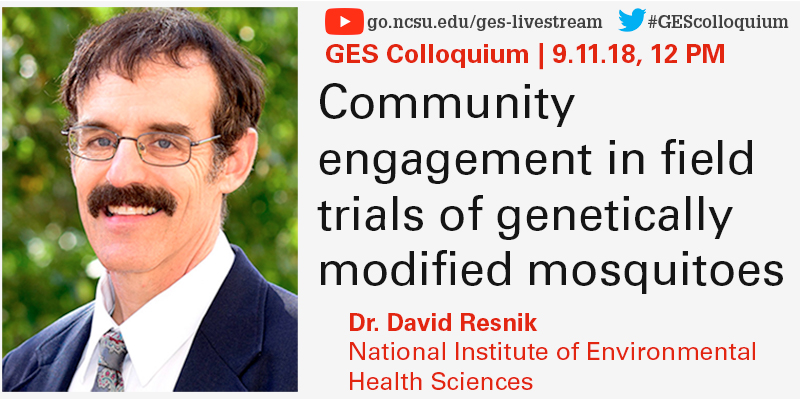
Speaker: David Resnik | Abstract: Effective community engagement is an important legal, ethical, and practical prerequisite for conducting field trials of genetically modified mosquitoes, because these studies can substantially impact communities and it is usually not possible to obtain informed consent from each community member.
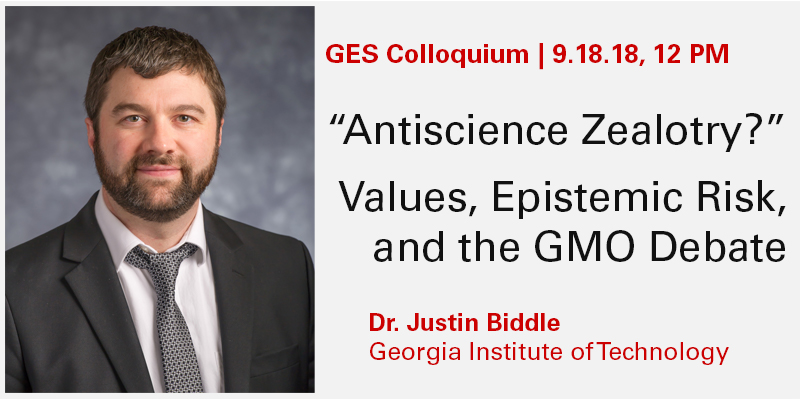
Justin B. Biddle is an Associate Professor in the School of Public Policy at the Georgia Institute of Technology. His research interests are interdisciplinary in nature, drawing on fields such as philosophy of science, technology, and medicine; bioethics; food studies; ethics of emerging technologies, and science and technology policy. Conceptually, his research explores the relationships between three sets of issues: (1) the role of values in science, technology, and medicine; (2) the epistemic implications of the social organization of research, and (3) ethics and policy. He has explored these relationships primarily in the areas of biomedical research and agricultural biotechnology.
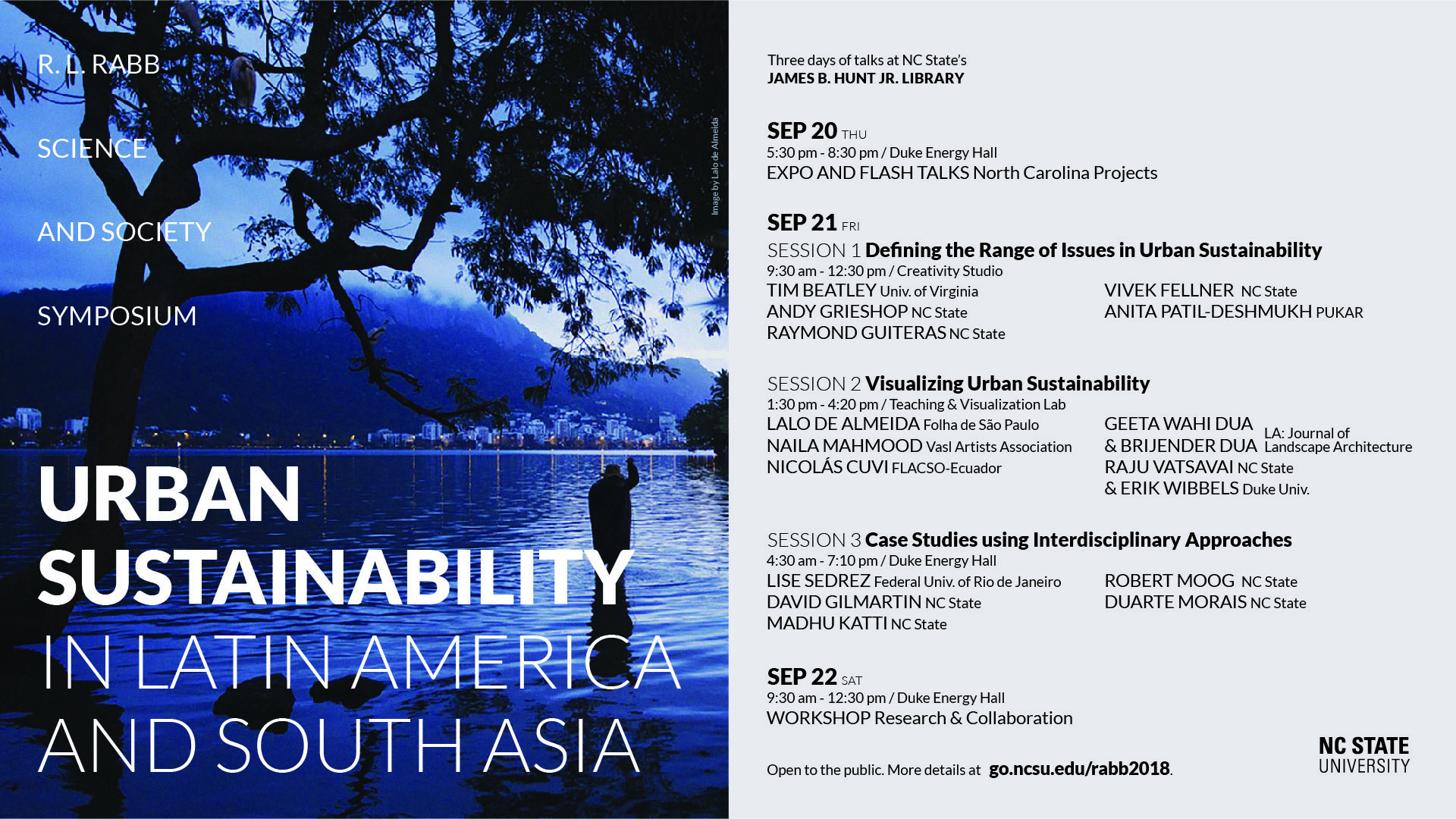
Urban Sustainability in South Asia and Latin America September 20-22, 2018 North Carolina State University The Symposium The first R. L. Rabb Science and Society Symposium brings together a group of interdisciplinary scholars, writers, artists,...
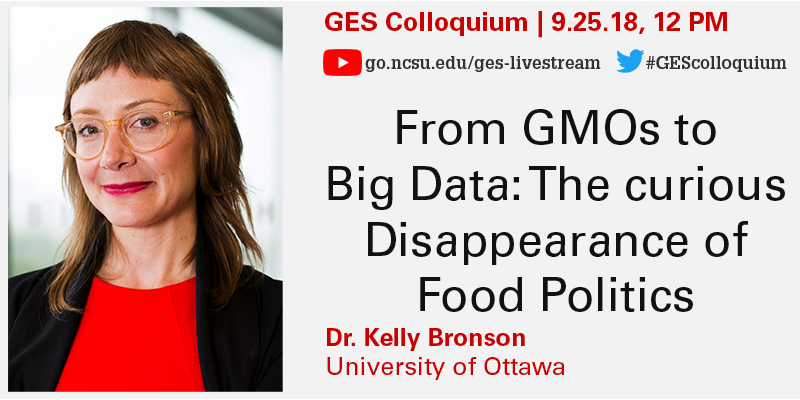
Kelly Bronson, uOttawa - Abstract: Many scholars have made sense of opposition to genetically engineered (GE) organisms as contextual: these tools are judged in their historical linkages with poisonous agricultural chemicals (like dichlorodiphenyltrichloroethane/DDT), and with the corporations responsible for the production of such chemicals who now sell GE seed systems.

Discussion with Kelly Bronson Follow-up discussion after Dr. Bronson's Colloquium on 9/25. Kelly Bronson will be leading a discussion of Phil Mirowski’s recent article, “The future(s) of open science” (2018). This paper will provide a...
Continue reading "Colloquium Follow-up Discussion with Kelly Bronson"
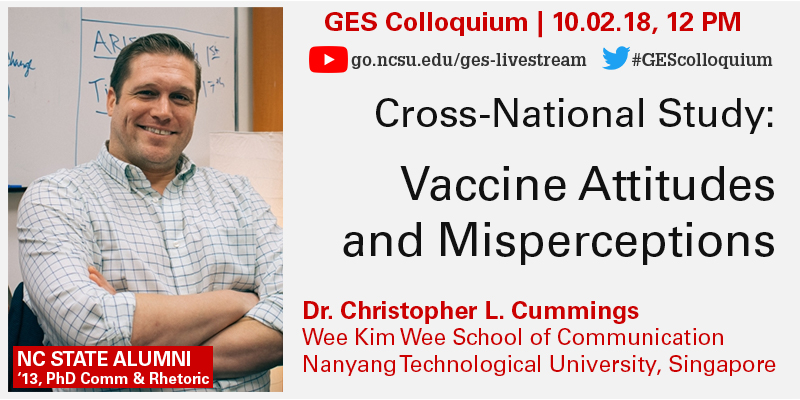
10/2 Speaker: Christopher Cummings | Abstract: "Vaccines are among the most effective disease prevention tools. Vaccines provide first-line disease prevention and are one of the most cost-effective initiatives to improve public health. While virtually all medical practitioners agree that vaccines are greatly beneficial, there are widespread reports of uncertainty and skepticism regarding vaccine efficacy, side effects, and information needs across traditional and new media. This reflects the obfuscated perspective held by many members of the public who note considerable concern when it comes to making immunization decisions. Additionally, immunization rates remain substandard for many diseases around the world and the literature investigating vaccine reluctance signals a pressing need to improve health literacies and health communication in order to dispel vaccine myths and promote immunization uptake around the world."
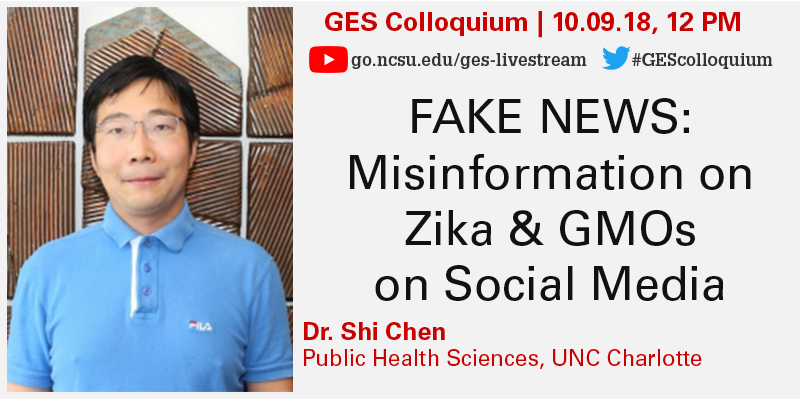
10/9 Colloquium: Shi Chen | Abstract: Social media have become an integral part of public health communication. More and more individuals first resort to social media for information during health crisis and disease outbreaks. While the low cost and easy access of social media make it more convenient for health communicators to disseminate useful information to the general public, they also have the side effect of enabling wide and fast spread of fake health news.
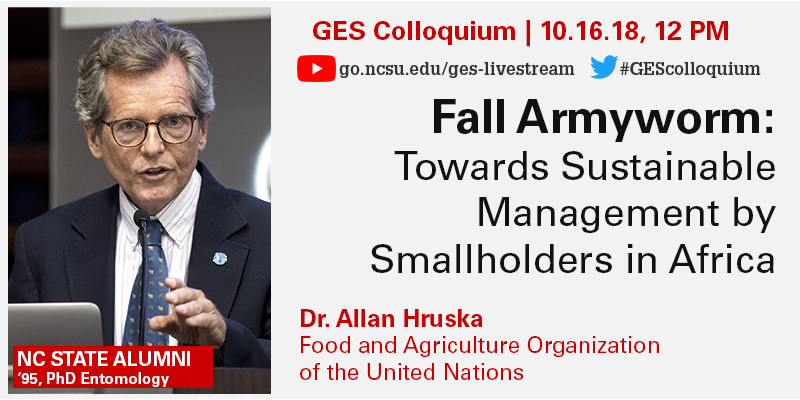
10/16 Colloquium: Allan Hruska | Abstract: Fall Armyworm (Spodoptera frugiperda) (FAW) is an important crop pest in the Americas, especially in tropical and sub-tropical areas where it can overwinter. FAW was confirmed in Africa in early 2016 and has quickly spread across Sub-Saharan Africa and beyond. Recently it has been confirmed in India and Yemen. It is now infesting tens of millions of acres of maize across Africa, and rapidly moving on to sorghum and millets.
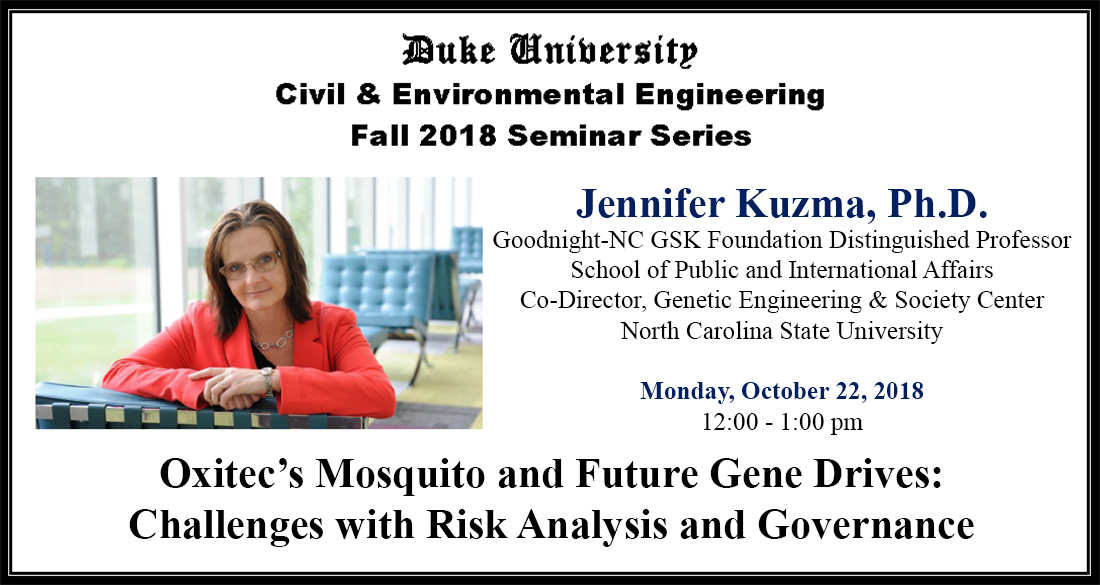
Duke University Civil & Environmental Engineering | Fall 2018 Seminar Series Oxitec’s Mosquito and Future Gene Drives: Challenges with Risk Analysis and Governance Abstract: In this presentation, I will discuss the current risk assessment and oversight challenges...
Continue reading "Jennifer Kuzma – Oxitec’s Mosquito and Future Gene Drives (at Duke University)"
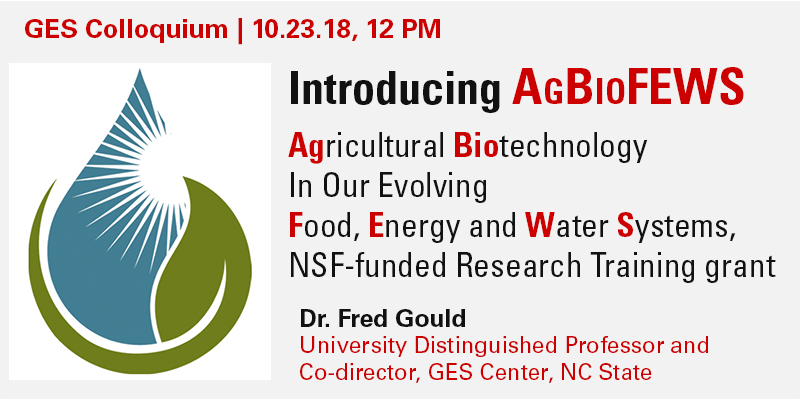
The GES Center has received a National Science Foundation funded research training grant to launch AgBioFEWS, or Agricultural Biotechnology in our Evolving Food, Energy, and Water Systems. Fred will be discussing the program activities, goals, and rollout plan.
Note: This colloquium will not be live-streamed, although we will be filming to include footage in the program's recruitment video. We kindly ask that attendees this week avoid wearing clothing with large logos or potentially distracting graphics. Thank you!