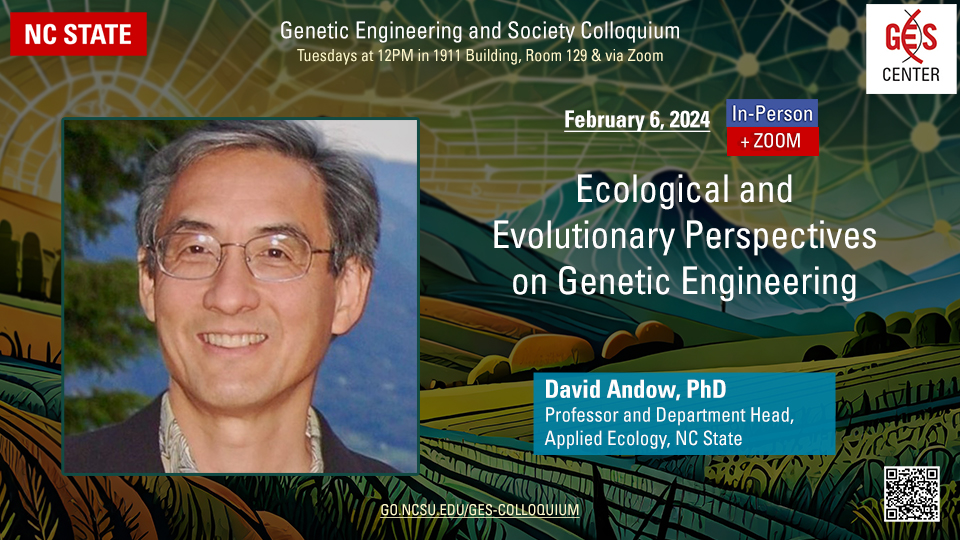
David Andow – Ecological and evolutionary perspectives on genetic engineering | GES Colloquium
Ecological and evolutionary perspectives have greatly influenced the development of genetic engineering as exemplified by significant events from history.
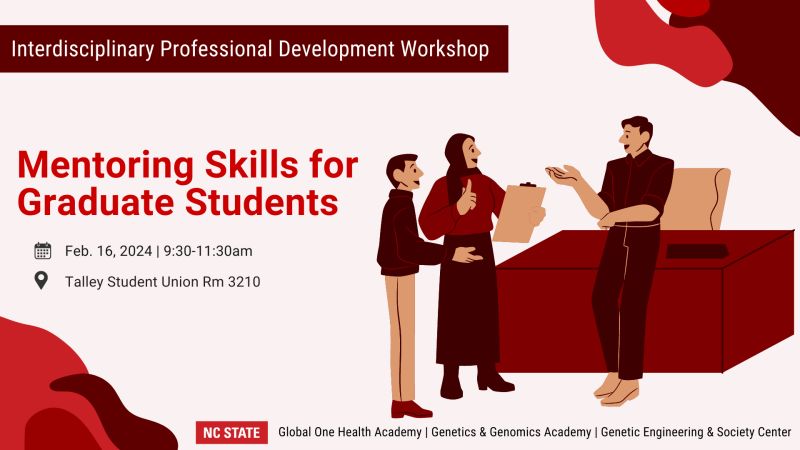
Genetics and Genomics Scholars, AgBioFews, and Global One Health Fellows from all cohorts are invited to participate in monthly professional development workshops. The topic for the February 16th workshop will be Mentoring Skills for Graduate Students
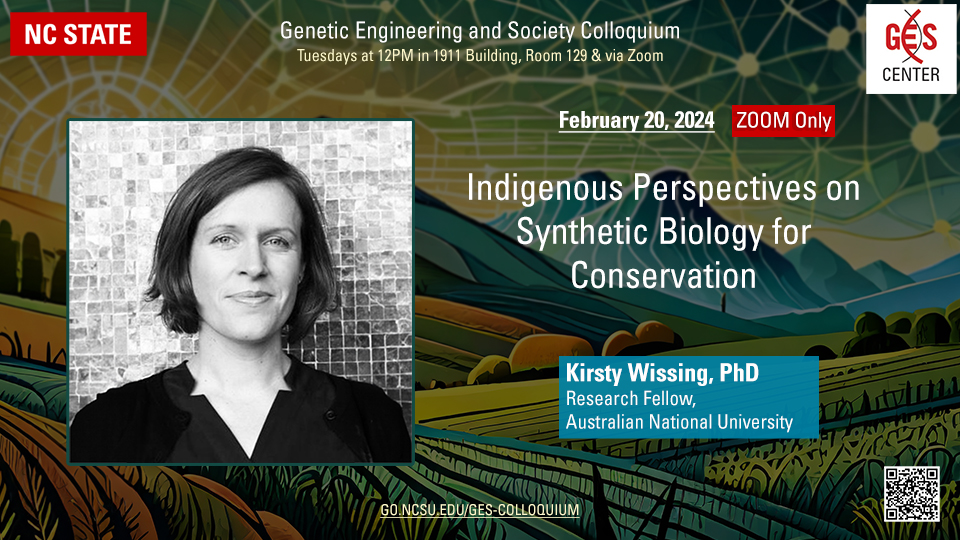
A discussion of synthetic biology and Torres Strait Islanders, bringing their perspectives into conversation to explore cultural implications for future island-bound applications of genetic biocontrol technologies, such as gene drives.
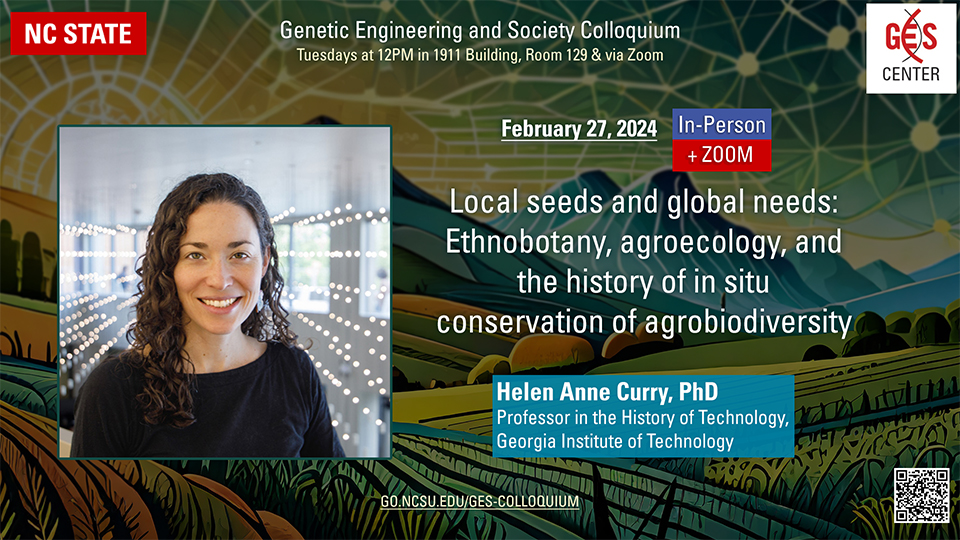
This talk will explore how insights from Indigenous agricultural practices, both past and present, can inform global efforts to conserve diverse crop varieties and bridge the gap between local practices and broader sustainability goals.
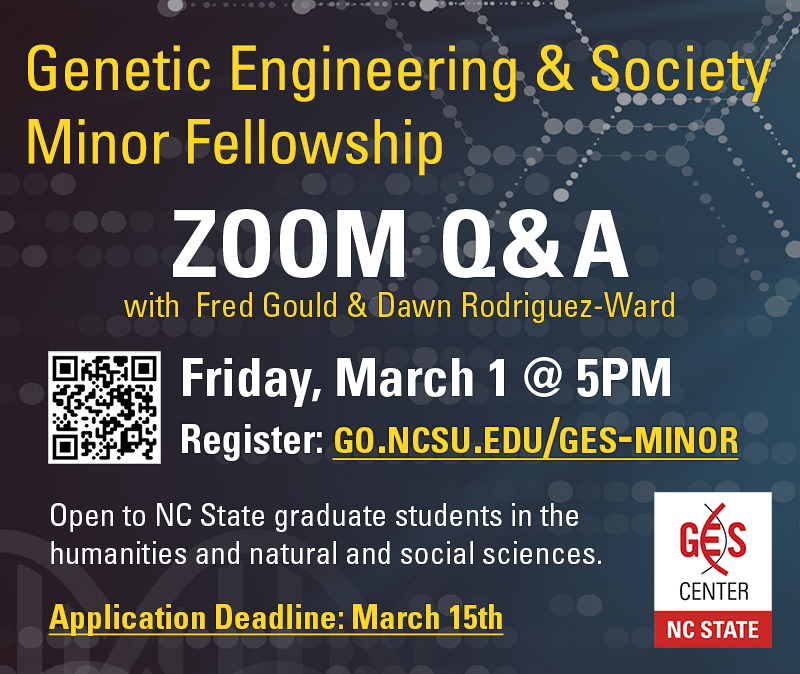
Dr. Fred Gould, GES Minor Co-Director, and Dr. Dawn Rodriguez-Ward, GES Program Coordinator, on Friday, March 1, 2024, at 5:00 PM. The Zoom session began with a brief presentation of the GES Minor program and then moved on to a discussion with attendees.
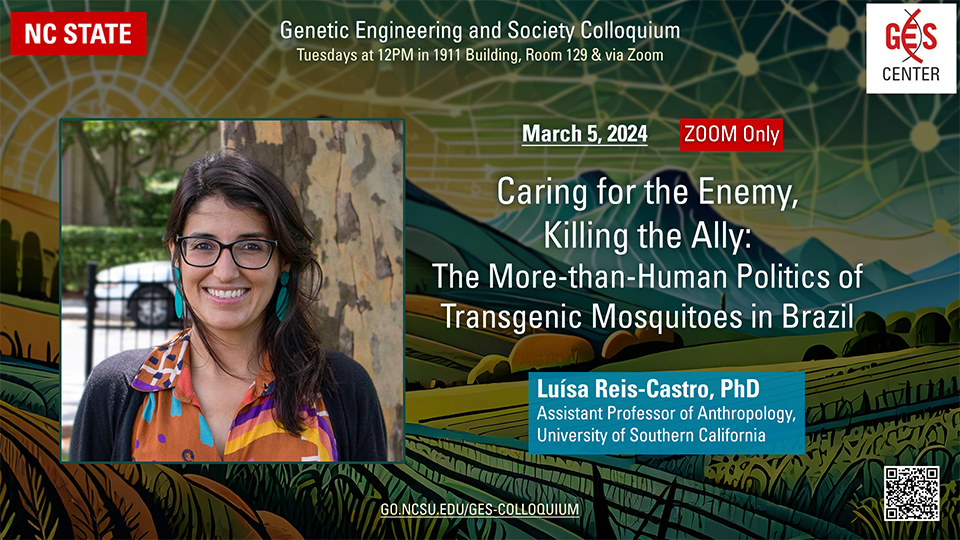
ZOOM ONLY. This talk, based on ethnographic research with scientists and technicians working with transgenic mosquitoes in Brazil, examines the class, gender, and regional issues present in the efforts to transform the mosquito from a “problem” into a “solution.”
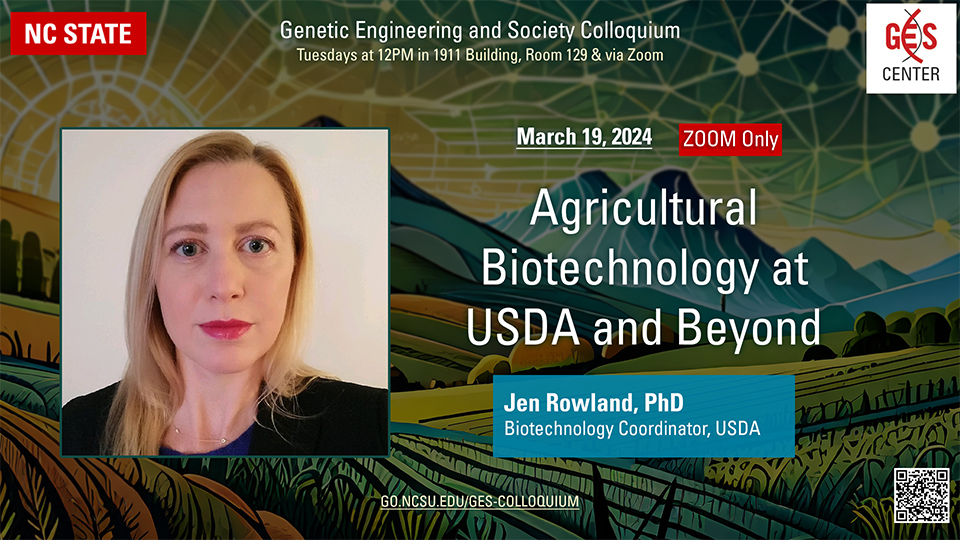
USDA supports the development, use, regulation, and trade of agricultural biotechnologies through multiple agencies and programs.
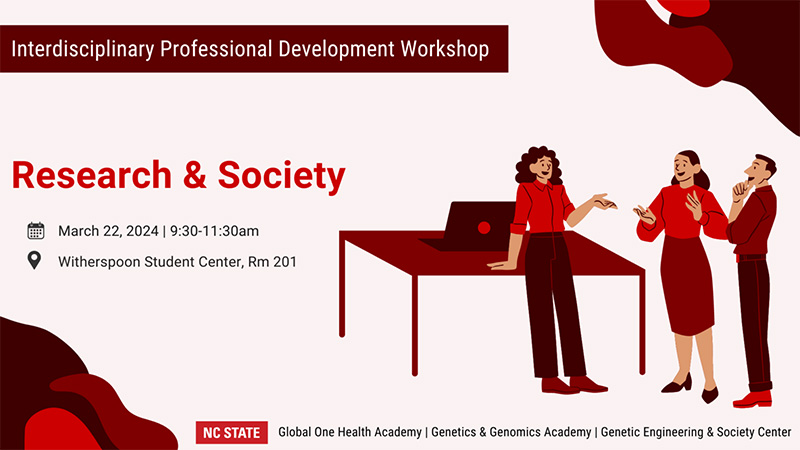
The Global One Health Academy, Genetics & Genomics Academy, and GES Center are co-hosting a interdisciplinary professional development workshop on Weaving Research & Society, presented by Katie Barnhill and Erin Seekamp.
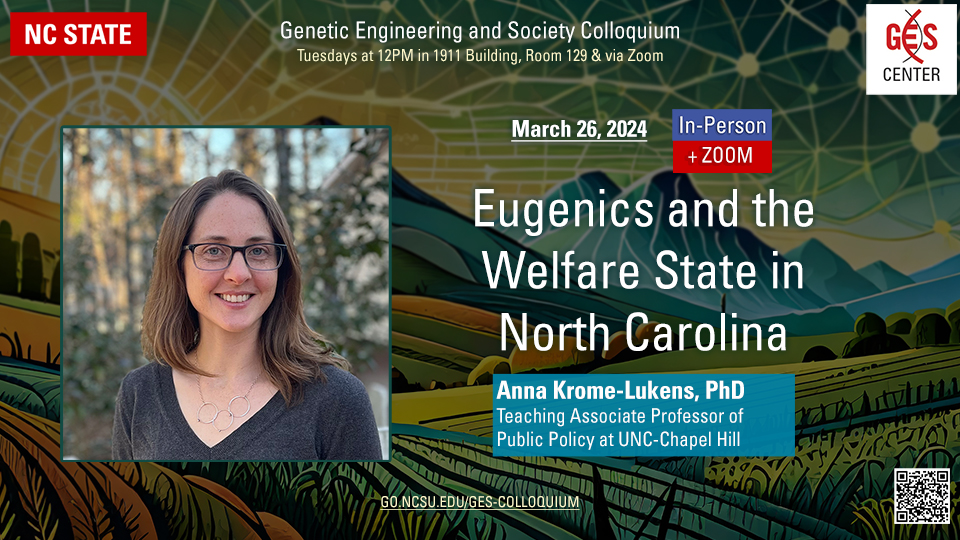
Anna Krome-Lukens, PhD, Teaching Associate Professor and Director of Experiential Education, Public Policy at UNC-Chapel Hill
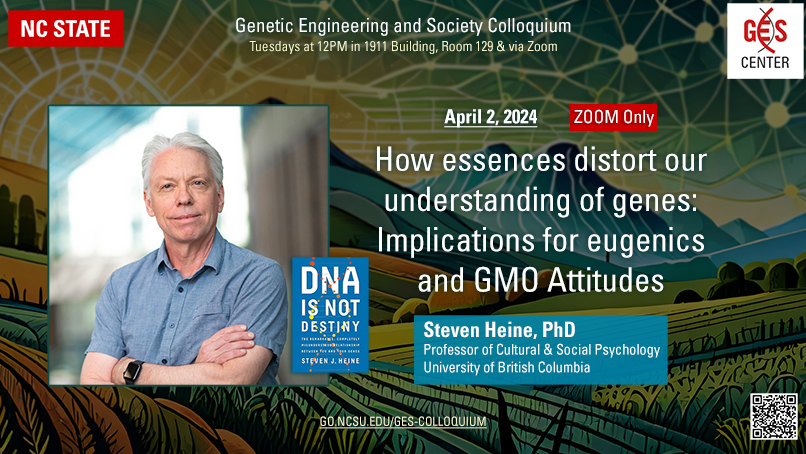
How psychological biases of essentialism distort the ways people understand genetics, eugenics, and GMO products.
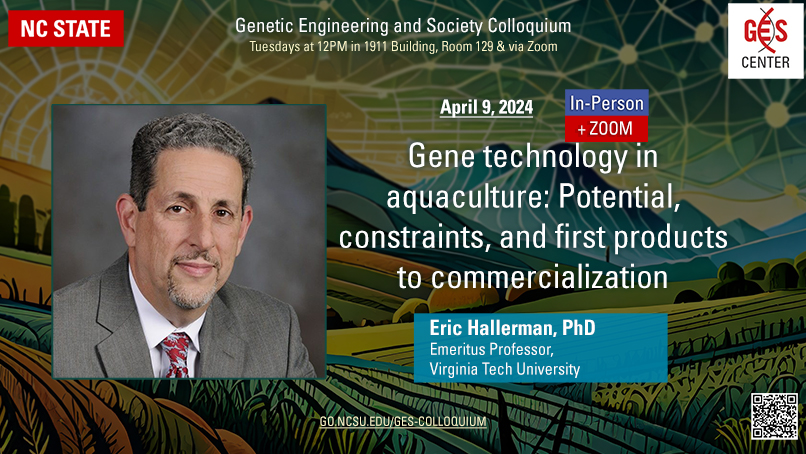
While aquaculture biotechnology has the potential to improve the sustainability of aquaculture, its realization will depend upon enabling public policy.
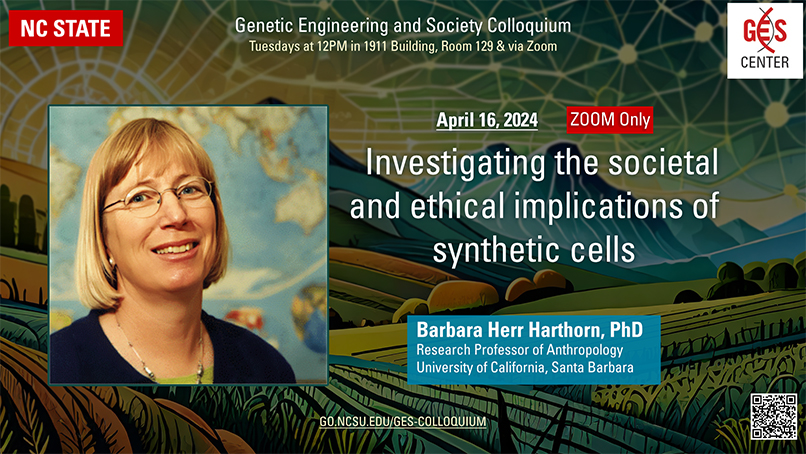
ZOOM ONLY. This talk introduces 3 ongoing NSF-funded collaborative interdisciplinary projects investigating US public and expert views on bottom-up synthetic cells using a responsible research and innovation framework.