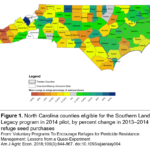
Publication: Voluntary Programs To Encourage Refuges for Pesticide Resistance Management
Dr. Zack Brown, assistant professor of agricultural economics and GES Center Executive Committee member, has published an article in the American Journal of Agricultural Economics which examines the implications of using behavioral approaches to managing pesticide...
Jennifer Kuzma in the WSJ: Referring to gene-editing as “breeding” seems disingenuous
Is This Tomato Engineered? Inside the Coming Battle Over Gene-Edited Food The agriculture industry, which hopes Crispr technology will transform the business, faces opponents who call it ‘GMO 2.0’ By Jacob Bunge and Amy Dockser...
WIRED: Process of Elimination
A deep dive into the inception of the Genetic Biocontrol of Invasive Rodents (GBIRd) program, this article in WIRED details how Karl Campbell of Island Conservation came across GES Co-Director Fred Gould's research suggesting that the genetic engineering techniques being used to manage insect populations could also be applied to other species, like rodents. And then, what happened when CRISPR came along....
Gould quoted in Nature on synthetic organisms unable to breed with wild counterparts
Fred Gould is quoted in Nature, discussing a gene editing technique designed to make interbreeding between synthetic and wild organisms impossible. The technology, which targets gene expression, could be applied to mosquitoes to control infectious diseases, such as malaria, or to invasive species, like Asian carp. "This is an ingenious system."...
Scott Lab Research Featured During Visit from Central American Officials
Written by Melinia Florez-Cuadros At NC State, Dr. Max Scott and his lab are engineering transgenic strains of sheep blowfly, which is a pest species in Australia but also serves as model system for the New...Continue reading "Scott Lab Research Featured During Visit from Central American Officials"

Jennifer Kuzma on Institute for Emerging Issues First in Future podcast
December 12, 2017 Dr. Jennifer Kuzma speaks with Leslie Boney, Director of the Institute for Emerging Issues (IEI) at NC State on the First in Future podcast. In this pod, Dr. Kuzma discusses gene edited...Continue reading "Jennifer Kuzma on Institute for Emerging Issues First in Future podcast"

Gene Drives and Responsible Innovation
It is not often that a new technology is at once hailed as a potential solution to pandemic disease, wildlife conservation and hunger, while also being feared as a potential military and environmental “bioweapon.” Gene drives,...
Funders respond to NASEM Gene Drive study
Funders of the National Academy of Sciences consensus study Gene Drives on the Horizon (2016) have published a response to the report in the December 2017 issue of Science. The study summarized "current understanding of the scientific discoveries related to gene drives and their accompanying ethical, legal, and social implications," and was co-authored by Dr. Jason Delborne, associate professor of science, policy and society in the College of Natural Resources and executive committee member of the GES Center....Continue reading "Funders respond to NASEM Gene Drive study"

Jason Delborne appointed to National Academies Forest Biotech Study Committee
Dr. Jason Delborne has been appointed to the National Academies of Sciences provisional committee on The Potential for Biotechnology to Address Forest Health, or Forest Biotech Study. The study will be looking at the potential uses of biotechnology to mitigate threats to forest tree health, identify ecological, ethical, and societal implications of using this technology in forests, and develop an agenda to address knowledge gaps in its application. ...Continue reading "Jason Delborne appointed to National Academies Forest Biotech Study Committee"

Scientist to the Senators: Ph.D. Student Johanna Elsensohn
Written by Chelsea Kellner This article originally appeared on CALS News Ph.D. student Johanna Elsensohn understands the importance of intersecting science with policy: During the international Zika virus crisis, she worked with policymakers on one...Continue reading "Scientist to the Senators: Ph.D. Student Johanna Elsensohn"
Genetic Engineering may not solve Africa’s fall armyworm problems
The fall armyworm which is a major pest of corn in the western hemisphere has become an invasive pest in Africa in the past few years. Some groups are calling for use of Bt corn as a solution. In this video Dr. Gould describes why it would take great dedication and large resources in money and people to use this approach in an equitable and sustainable manner....Continue reading "Genetic Engineering may not solve Africa’s fall armyworm problems"

Scientific American: Could Genetic Engineering Save the Galápagos?
Campbell first became intrigued by the possibilities of gene drive in 2011, when he sat in on a conference call between biologists at NC State University and officials of the U.S. Fish and Wildlife Service to discuss a possible genetic approach to control a runaway mouse problem on Southeast Farallon Island, about 20 miles west of the California coast, near San Francisco. John Godwin, a North Carolina State neurobiologist who studies animal behavior, had learned of the Farallon issue while skimming the Internet in 2011. He happened to be at a university with an established infrastructure dedicated to experimenting with—and considering the ethical implications of—genetic manipulation....Continue reading "Scientific American: Could Genetic Engineering Save the Galápagos?"
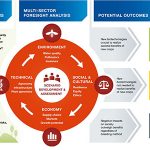
Kuzma examines benefits, regulation of gene edited crops in EMBO
In this article, published by EMBOpress, researchers look at how new genetic-engineering (GE) technologies based on gene editing can help to generate crop varieties to address critical challenges in agricultural development. However, governance systems for these crops are poorly defined and currently uncertain....Continue reading "Kuzma examines benefits, regulation of gene edited crops in EMBO"

IGERT in Peru – The Role of Rhetoric in Transgenetics
By Molly Hartzog Week 1 – Lima, Peru Hola a todos! I have been in Peru since July 14 with NC State’s Genetic Engineering and Society program, to study pest issues in developing nations. Today we arrived in...Continue reading "IGERT in Peru – The Role of Rhetoric in Transgenetics"