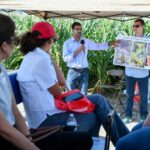
The ‘Public Good’ of Controlling Mobile Pests with Genetically Engineered Crops
Margaret Huffman, Nov. 11 2020 | Choosing to plant genetically engineered seed that will grow insect-resistant corn (Bt corn) is more expensive at the time of planting but is common practice in places like the United States and the Philippines. This study takes a closer look at those who do not plant genetically engineered seed because their neighbors use of Bt corn eliminated the local pest pressure....Continue reading "The ‘Public Good’ of Controlling Mobile Pests with Genetically Engineered Crops"

Student Spotlight: Jabeen Ahmad, AgBioFEWS Fellow
CALS Magazine, Fall 2020 | AgBioFEWS Fellow Jabeen Ahmad's interdisciplinary journey from public defender to plant biologist. ...Continue reading "Student Spotlight: Jabeen Ahmad, AgBioFEWS Fellow"
Responsible Innovation in Biotechnology: Stakeholder attitudes and implications for research policy | Elementa
Jennifer Kuzma, September 1, 2020 | This article explores attitudes of stakeholders involved in biotechnology towards the Responsible Innovation (RI) framework. ...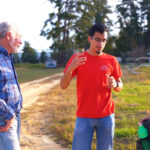
Office of Research and Innovation Honors Three with Award for Excellence
Matt Simpson, August 10, 2020 | Three Office of Research and Innovation employees won this year’s Award for Excellence — SHRA employee Patti Mulligan and EHRA employees Daniel Findley and Nicholas Leblanc. ...Continue reading "Office of Research and Innovation Honors Three with Award for Excellence"
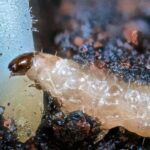
Returning to Farming’s Roots in the Battle Against the ‘Billion-Dollar Beetle’ | Agricultural and Resource Economics
Rosemary Brandt, July 21, 2020 | Nicknamed the "billion-dollar beetle" for its enormous economic costs to growers in the United States each year, the western corn rootworm is one of the most devastating pests farmers face....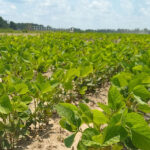
CALS News – Using Leaf Fungi to Improve Crop Resilience
Mollie Rappe, June 29, 2020 | Jason Delborne, a researcher with the Genetic Engineering and Society Center and the College of Natural Resources, will lead the efforts to assess public opinion and analyze the potential regulatory pathway for techniques to introduce beneficial plant fungi to crops....Continue reading "CALS News – Using Leaf Fungi to Improve Crop Resilience"
Blog: We must do better…
Todd Kuiken, June 11, 2020 | The following reflection was part of a special GES colloquium held on June 5, 2020, discussing the new USDA regulations on GM crops. Which was held in the midst of national protests against police brutality. They are my personal reflections in support of #blacklivesmatter and the systemic racism and inequalities seen throughout our institutions....
Genetically modified mosquitoes could be released in Florida and Texas beginning this summer – silver bullet or jumping the gun?
Jennifer Kuzma, June 3, 2020 | Release of GM mosquitoes in Florida is imminent. But a multidisciplinary team of scientists believe that more studies are needed first. They encourage a publicly accessible registry for GM organisms....
Blog: COVID-19 Reveals the Personal Side of Globalization – GM Researchers Should Take Note
Nora Haenn, 5/20/2020 | COVID-19 has shown us, there’s an important consequence for the way globalization is both local at all points and persistently invisible in its entirety....
Blog: Yes, and…
Royden Saah and Eli Hornstein, 4/22/2020 | To counter the COVID-19 pandemic, YES we can be responsible AND take urgent, unfamiliar action....
Decision-making about Emerging Technologies and Global Risks
GES Center receives NSF Grant to investigate geoengineering for global climate change...Continue reading "Decision-making about Emerging Technologies and Global Risks"

Blog: Review of Art’s Work in the Age of Biotechnology: Shaping Our Genetic Futures | We Make Money Not Art
Regine Debatty - April 6, 2020 | Artists offer new insights about genetic engineering by bringing it out of the lab and into public places to challenge viewers’ understandings about the human condition, the material of our bodies...
COVID-19—Biotechnology Is Never Enough
The currently-unfolding COVID-19 case boldly underscores the reality that science and technology are never enough to solve global health problems alone. Rather, we need a strategic and systematic integration of social sciences, risk sciences, and communication along with science, technology, and innovation to adequately meet the challenges of emerging global risks, such as COVID-19. ...
Virtual Colloquium: Zoom Instructions
GES Colloquium Zoom registration information...