‘Human Nature’ documentary at Full Frame Festival
Friday, April 4, 1:10 PM | Featuring GES Center affiliate, Dr. Rodolphe Barrangou - SYNOPSIS: From executive producer Dan Rather and director Adam Bolt, the co-writer and editor of the Oscar-winning film Inside Job, comes the story of the biggest tech revolution of the 21st Century. And it isn’t digital, it’s biological. ...Continue reading "‘Human Nature’ documentary at Full Frame Festival"
Procedurally Robust Risk Assessment Framework for Novel Genetically Engineered Organisms and Gene Drives
Jennifer Kuzma, March 8, 2019 | This article reviews the current state of gene-editing regulation for crops, illuminating the ways in which technology developers are repeating practices that may lead to the public and ethical failures of the first generation genetically engineered crops, and argues that the contentious socio-political history of genetic engineering will repeat itself for gene editing if these continue....
Report: Stakeholder Perspectives on Gene Drive Mice for Biodiversity Protection on Islands
Jason Delborne, February 20, 2019 | This article reviews the current state of gene-editing regulation for crops, illuminating the ways in which technology developers are repeating practices that may lead to the public and ethical failures of the first generation genetically engineered crops, and argues that the contentious socio-political history of genetic engineering will repeat itself for gene editing if these continue....
NASEM Sackler SciComm: The promise and perils of gene drives
In November of 2017, an interdisciplinary panel discussed the complexities of gene drive applications as part of the third Sackler Colloquium on “The Science of Science Communication.” This paper builds on the ideas and conversations from the session to provide a more nuanced discussion about the context surrounding responsible communication and decision-making for cases of post-normal science. Deciding to use gene drives to control and suppress pests will involve more than a technical assessment of the risks involved, and responsible decision-making regarding their use will require concerted efforts from multiple actors....Continue reading "NASEM Sackler SciComm: The promise and perils of gene drives"
WP: Gene-edited farm animals are coming. Will we eat them?
“We’re at this inflection point in society, where gene editing is really taking off, and now is the time we could have a more sustained public conversation about how we want it used in our world and how we don’t want it to be used,” said Jennifer Kuzma, co-director of the Genetic Engineering and Society Center at North Carolina State University. “All the polls indicate that people are less comfortable with animal biotechnology than plant biotechnology... A regulatory system cannot be based 100 percent on science or scientific risk, and values come into play when setting the standards.”...Continue reading "WP: Gene-edited farm animals are coming. Will we eat them?"

Issues: Regulating Gene-Edited Crops
This article reviews the current state of gene-editing regulation for crops, illuminating the ways in which technology developers are repeating practices that may lead to the public and ethical failures of the first generation genetically engineered crops, and argues that the contentious socio-political history of genetic engineering will repeat itself for gene editing if these continue....
AP: Kuzma discusses need for case-by-case scrutiny of gene-edited foods
Per Kuzma, companies will have to be up-front about how these new foods were made and the evidence that they’re healthy. She wants regulators to decide case-by-case which changes are no big deal and which might need more scrutiny.“Most gene-edited plants and animals are probably going to be just fine to eat. But you’re only going to do yourself a disservice in the long run if you hide behind the terminology,” Kuzma said....Continue reading "AP: Kuzma discusses need for case-by-case scrutiny of gene-edited foods"
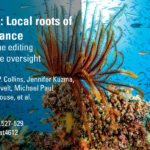
Editing nature: Local roots of global governance
Dr. Jennifer Kuzma, Goodnight-NC GSK Foundation Distinguished Professor and Co-director of the Genetic Engineering and Society Center, was one of the lead authors on an interdisciplinary team calling for global oversight of environmental gene editing in this Science Policy Forum, Editing Nature: Local roots of global governance....Continue reading "Editing nature: Local roots of global governance"
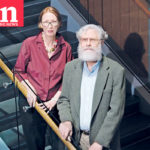
Gould quoted in C&EN: Building bioethics into the future of life sciences innovation
Scientists who refuse to engage with ethicists and the public will find themselves at a disadvantage. “Just because you are a scientist and have invented something doesn’t mean you have authority over it,” says Fred Gould, an entomologist and co-director of the Genetic Engineering & Society Center at North Carolina State University. He points to the National Academies report’s advocacy of participatory decision-making. Resistance from the science community based on ethicists and the public not fully understanding the science wears thin, he says. “You are a pretty poor scientist if you can’t explain what these things are about to an ethicist,” he says....
Paul Vincelli – ‘Can CRISPR Displace Crop Pesticides?’
9/4 GES Colloquium: We are thrilled to welcome Paul Vincelli as our first invited speaker of the semester. Paul is an extension professor at the University of Kentucky in the department of Plant Pathology, as well as co-host of the Talking Biotech podcast! He will be available to have lunch and/or meet with folks during his visit on 9/4. Request meeting with Paul >>...Continue reading "Paul Vincelli – ‘Can CRISPR Displace Crop Pesticides?’"
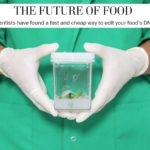
Washington Post: Kuzma calls for mandatory regulatory process for gene-edited foods
“We need a mandatory regulatory process: not just for scientific reasons, but for consumer and public confidence,” Kuzma said. “I think the vast majority of gene-edited foods are going to be as safe as their conventionally bred counterparts. But I don’t buy into the argument that’s true all the time for every crop.”...
EU ruling on gene-edited plants and GMOs is more status quo than disruptive
Prior to the recent European Union ruling regarding gene-edited plants, opponents stoked fears that these new gene editing techniques were a loop-hole for big agricultural companies to release their untested, dangerous GMOs onto an unsuspecting...Continue reading "EU ruling on gene-edited plants and GMOs is more status quo than disruptive"

Jennifer Kuzma in the WSJ: Referring to gene-editing as “breeding” seems disingenuous
Is This Tomato Engineered? Inside the Coming Battle Over Gene-Edited Food The agriculture industry, which hopes Crispr technology will transform the business, faces opponents who call it ‘GMO 2.0’ By Jacob Bunge and Amy Dockser...
WIRED: Process of Elimination
A deep dive into the inception of the Genetic Biocontrol of Invasive Rodents (GBIRd) program, this article in WIRED details how Karl Campbell of Island Conservation came across GES Co-Director Fred Gould's research suggesting that the genetic engineering techniques being used to manage insect populations could also be applied to other species, like rodents. And then, what happened when CRISPR came along....
Barrangou Wins NAS Prize in Food and Agriculture Sciences
Dr. Rodolphe Barrangou adds another award to his long list of accolades: the 2018 NAS Prize in Food and Agriculture Sciences for his discovery of the genetic mechanisms and proteins driving CRISPR-Cas systems....Continue reading "Barrangou Wins NAS Prize in Food and Agriculture Sciences"