Becky Goldburg – Supporting Actionable Research That Informs Conservation | GES Colloquium
How Pew's approaches increase the likelihood that research is applied in real world conservation decisions....
Ben Novak – Biotechnologies for Conservation and Their Intended Consequences | GES Colloquium
IN-PERSON COLLOQUIUM. Revive & Restore's "Intended Consequences" initiative aims at rebalancing the risk-benefit equation around the use of biotechnologies in conservation practices....3/29 GES Colloquium Cancelled
Statement regarding cancellation of the upcoming Colloquium on March 29, Panel: Narratives and Storytelling in the Public Communication of Science and Technology...
Faith Kearns – Getting to the Heart of Science Communication | GES Colloquium
A 21st century guide to communicating science on emotional and contentious topics...Continue reading "Faith Kearns – Getting to the Heart of Science Communication | GES Colloquium"
Denise Costich – The role of germplasm banks in global food security | GES Colloquium
The Goal is to have fully secure and accessible Plant Genetic Resources for Food and Agriculture where there is the potential for a multi-lateral flow of germplasm and knowledge among the participants, basically, all human beings on Earth....
John Field – Carbon Sequestration and GHG Mitigation in Carinata Cropping Systems | GES Colloquium
Ethiopian mustard (Brassica carinata) can produce substantial amounts of aviation fuel and soil carbon benefits when grown as a winter crop in the southeastern US. ...
AgBioFEWS Cohort 2: Perspectives of Eastern North Carolina farmers and the impact of biotechnology | GES Colloquium
The second AgBioFEWS cohort discusses lessons learned from visiting Eastern NC....
Amy Huang – The Quest to Reimagine Meat | GES Colloquium
Explore the state of alternative protein research and learn how universities can accelerate our transition to a better food system....Continue reading "Amy Huang – The Quest to Reimagine Meat | GES Colloquium"
Julius Tillery – Cotton is our Culture | GES Colloquium
Julius Tillery, Founder of BlackCotton.Us, will discuss why cotton is our culture....Continue reading "Julius Tillery – Cotton is our Culture | GES Colloquium"
Ross Sozzani – From basic science to engineering tools to translational research | GES Colloquium
Dr. Ross Sozzani, Director of Plant Improvement at NC PSI, on the multidisciplinary techniques contributing to knowledge and understanding of engineering agronomically enhanced plants for food production....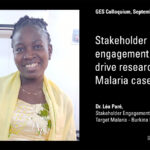
Léa Paré – Stakeholder engagement in gene drive research: A Target Malaria case study | GES Colloquium
Target Malaria's approach to stakeholder engagement is an iterative process, constantly adapting and evolving based on the context and values of our stakeholders, as well as new guidance and recommendations developed in accordance with international best practice....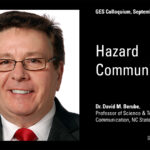
David Berube – Hazard Communication | GES Colloquium
Hazard Communication refers to communication to a limited group of stakeholders and involves three variables: hazard data, dosage data, and exposure data....Continue reading "David Berube – Hazard Communication | GES Colloquium"
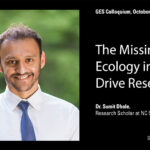
Sumit Dhole – The missing ecology in gene drive research | GES Colloquium
GES Fall Colloquium, details forthcoming...Continue reading "Sumit Dhole – The missing ecology in gene drive research | GES Colloquium"
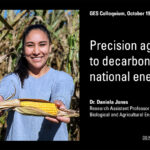
Daniela Jones – Precision agriculture to decarbonize our national energy needs | GES Colloquium
Developing data-intensive algorithms and applying diverse modeling and optimization tools to tackle the national grand challenge to decarbonize our energy needs while securing a sustainable and resilient supply chain infrastructure. ...